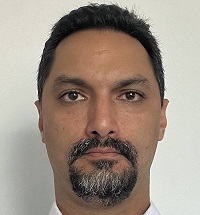
Wednesdays come with a special atmosphere at the Academy. Divine light seems to shine through every movement and action. But this Wednesday is different, as we are here for the second part of our interview with Master Amin Dezhakam, the Dideban (Watcher) of Worldview at Congress 60. It is approaching 10:20 a.m., and, as previously arranged, we make our way to meet Master Amin. There are still many people waiting in line to receive the command of their liberation from addiction and have their Second Journey confirmed after submitting the transcription of 40 [educational] CDs. Some are also waiting to take commemorative photos with him.
I find myself thinking about how much I love this room and its atmosphere, or rather, how much we all love it. This is where we have experienced the wonderful moment when travelers receive the command marking the end of their treatment and achieve liberation. Being present in this room to receive that liberation is a dream shared by every traveler and their companion. Remembering this, I close my eyes and ask God to open the way for everyone seeking freedom from addiction, so that, after enduring many hardships and receiving the necessary teachings, they too can experience the feeling of liberation. As the saying goes, “The honor of a place comes from those who inhabit it.” Indeed, the true worth and prestige of a place come from the people who fill it.
While I am lost in these thoughts, I hear Master Amin's voice. With his kindness, he says, “I can no longer answer questions today. Anyone who wants a commemorative photo can take one, because I have an interview to attend.”
I look around and notice that the crowd is getting smaller. One or two people remain, insisting on getting answers to their questions. Master Amin, with the same remarkable patience and kindness, a remarkable quality passed down from father to son, takes his time and answers them.
We have been standing for more than an hour, waiting for our interview. Only God knows how rewarding that wait feels when Master Amin finally says, “Well, let's get started with the interview. I'm sorry to have kept you waiting.”
When we thank him for agreeing to the interview and prepare to ask our questions, he begins just as he did in the previous interview:
Master Amin Dezhakam: “Hello, friends. I am Amin, a traveler.”
And, in keeping with the tradition of Congress 60, we warmly return his greeting from the bottom of our hearts.
Question: Since taking the Eighth Valley Covenant has become mandatory for guide assistants, when can we be sure that it is the right time to take the covenant?
Master Amin Dezhakam: That is a good question, because sometimes members ask about the Eighth Valley. Some have been free from addiction for less than two months and want to carry out the covenant too soon, when they are not yet eligible. They need to wait eight or nine months [after their liberation from addiction] before they can do so. On one hand, there is the enthusiasm of those who want to make this divine covenant as soon as possible and move forward on their path, because they want the positive changes they have experienced through treatment to continue and grow. On the other hand, some members who have spent more time at Congress 60 develop a kind of obsession, because they understand responsibility, service, and commitment, and they know that when a person takes on a responsibility, they must fulfill it properly. Having served at Congress 60 and gained a deeper understanding, they begin to doubt themselves when considering the covenant. They worry that they might make the commitment [the 8th valley covenant] but fail to live up to it, causing things to go wrong and leading to negative consequences.
The difference between these two groups is that those who have not yet entered service are eager to take the covenant quickly, while those who have already served tend to hesitate a little. I once asked Mr. Dezhakam about this. The philosophy behind the covenant and the Eighth Valley is that a person makes every possible effort to remain on the path of the Straight Path. What people do, is their utmost effort. Once they have reached a certain level of maturity and readiness, and genuinely feel this within themselves, they can make the covenant. After making it, they do their very best to honor the commitments they have declared and remain on the right path [in the Eighth Valley covenant, a Congress 60 member with eight months of liberation from addiction attends a place near a sea or a jungle and does some ceremonies including a promise of distancing from the anti-values].
It is possible for a person to be on the right path and still stumbles and falls at some point and commit an anti-value. This can happen. But the fact is that only a person knows within themselves if they have truly made their best effort or not. The purpose of the Eighth Valley Covenant is for a person to do everything within their ability to remain on the Straight Path. If they make a mistake, they make another effort to correct it and return to the path. However, if they have not made their best effort and then make a mistake, they must pay the price for it. Therefore, taking the Eighth Valley Covenant means accepting that we may make mistakes and learn through trial and error, while continuing to strive to stay on the right path, return whenever we stray, and correct our actions.
Question: When a person cannot feel happy about someone else's success, does this all come back to the factors discussed in the CD “Obstacles to Love”, such as possessiveness, the need for approval and respect, expectations, and a lack of ability? In other words, to reach a state of balance, should a person start from the first step, which is developing their abilities?
Master Amin Dezhakam: This is a fundamental principle in this matter, but there are also several supporting factors. For example, I may feel upset when I see others succeed or make progress. That is one issue. Another issue is that we have expectations of other people, which I have discussed elsewhere. These two subjects are connected.
If I cannot feel happy about someone else's success, or if I feel happy when something bad happens to them, it shows that something is wrong [in me] and that I need to work on it. Here, the feelings play the leading role. There is a feeling within us that makes us unhappy when we see others succeed. This feeling is taking the lead inside us. We may even feel pleased when we make sarcastic remarks or take jabs at others, because our feelings are trying to satisfy their own need. These are very subtle matters.
I remember that I had just finished my first year at university and was entering my second year. When I first started university, I was an excellent student, but by the end of my first year, I had received a failing grade in one subject, and my Grade Point Average (GPA) had dropped to 9.5 [out of 20]. Then, when the third semester began, some of my friends had become top students. When I started talking to them, I found myself making sarcastic remarks. They turned to me and asked, “Are you being sarcastic?” I had never behaved this way before, and I did not even realize what sarcasm was in that context. Yet there I was, making cutting remarks. Those remarks carry a kind of poison, the same poison we discuss in the CD “Poison”.
I said, “No, why would I make sarcastic remarks?” But later, I realized that was exactly what I had been doing. Their GPAs had risen to 16 or 17, while mine was 9.5. This is something we need to become aware of. We must learn to control our tongues, our words, and our actions, in other words, to restrain that feeling. Self-restraint and standing up to that feeling are important, and they are difficult practices, because when you make a sarcastic remark or insult someone, you feel a sense of relief.
And that makes sense, because a kind of poison has entered us and affected us. When we release some of that poison, its concentration decreases, and we feel a little better in the moment. But what happens as a result? First, we destroy the bonds of love. Second, since the poison is released, no antidote is produced [in the body]. For an antidote to develop, the concentration of the poison must remain at a certain level, it means that 10 units of poison is needed so that antidote is produced. But if you continually inject three or five units into others, the poison in your system always remains at a low level. You never reach the point where an antidote can be produced and make no progress.
As we begin to develop our abilities, we must also work on these other aspects. We have to purify our sensation, because if we neglect it, our efforts will be incomplete, because the feeling itself is not healthy. It is like gardening. Someone tells you that your garden is not doing well and that you need to plant saplings. That is a part of the work. But at the same time, you must remove the weeds. If you only plant trees and water them while allowing the weeds to grow alongside them, 90 out of the 100 trees you plant may never bear fruit. Therefore, practising patience, learning, and ultimately serving others are essential things we must work on alongside developing our abilities.
Question: How does worldview education help companions who have been attending Congress 60 for years, but whose travelers still do not attend?
Master Amin Dezhakam: The first thing worldview education gives a person is hope. The first impact it had on me was that it created hope within me. It gave me hope for change. I felt that I had come across a body of knowledge and that could help me resolve my problems and difficulties. I came to believe in this, and that belief helped me move forward through many different challenges over the years. When you feel that you have gained a tool and a form of knowledge that can actually make a difference, you begin to see that you can untangle many problems, resolve many difficulties, and change many of your feelings. This sense that change is possible is the first outcome of worldview education. Of course, we hope that the traveler will eventually come to Congress 60 and receive liberation from addiction, if God wants. That is the ultimate wish of any family with a loved one who struggles with substance use. But at the very least, worldview education can help you feel better about your own life and cope with its hardships more effectively.
For example, someone may have a child who struggles with substance use, but they may also have two other wonderful children, a good husband, and supportive brothers and sisters. Yet the pain that comes from having a loved one affected by addiction can become less overwhelming through learning worldview principles. We learn how to build and maintain healthy relationships with the other people in our lives and we learn how to address the sense of loss that has emerged [in this case, addictions] in our life.
Question: Is the hope for change that develops within us through worldview education in conflict with being realistic?
Master Amin Dezhakam: These are matters of feeling. When you begin to understand worldview principles, even a little, the first thing that happens is that the issues you face become clearer. The first thing Mr. Dezhakam wrote about was the Problem of Addiction. Once you understand what the problem actually is, you say, “Now let's go and solve it.” And the moment you say that, hope for change begins to emerge. For example, you acquire a piece of land and say, “Now let's build something on it.” Or “Now let's go to work.” You buy a house and say, “Now let's furnish it.” Why does worldview education create hope? Because it helps clarify the problems we face. It might explain that if you are not feeling well emotionally, it could be because you are carrying hatred within you and show you the structure of that feeling. You then begin to think, “So this may be why I feel this way. Now let’s fix it.”
Much of this is unfamiliar territory in our lives and Worldview education helps us understand. A person who is unfamiliar with these principles may simply think that they feel unhappy because they lack certain things: perhaps they have no money, no job, or a child struggling with addiction. They assume these are the reasons for their unhappiness and naturally ask, “When will I feel better? When my child is no longer addicted? When I become wealthy?” But worldview education teaches us that this is not the cause [of my bad feelings]. These issues are only related to the outside world, but this is our inner world which plays a decisive role. You may have a child who struggles with addiction and still you experience moments of happiness in your life. This is one of the things worldview educations can help us discover.
However, a distortion can sometimes develop in our understanding of worldview, and that is selfishness. I often caution people about this. Worldview education helps you work through your problems, but it does not tell you to turn your back on everyone, stop caring about others, withhold affection, or focus exclusively on your own purification and personal growth. This is a negative side effect that can arise from how we interpret worldview principles. We might say, “I come here purely for myself.” Yes, we have said that you matter the most. But we meant that you are important, not that you are the only person who matters.
This is something people need to be aware of, and remind themselves. On one side, there is the negative effect of selfishness and self-centeredness: wanting only to develop, progress, and feel good ourselves. On the other side, there is the belief that other people must change and grow before we can feel good. We need to work toward bringing these two forms of imbalance toward a balanced middle ground.
Question: Does Sensation change immediately when we perform a Healthy Action, assuming the action is genuinely healthy and not merely healthy in appearance? Or is it a cycle, as described in the cycle of the Tenth Valley, that requires more time to purify the Sensation? (Sometimes a person avoids committing anti-values, yet the negative feeling is still there.)
Master Amin Dezhakam: When we perform a healthy action, changes begin to take place immediately, and the action starts to have an effect. A genuinely healthy action creates change from the moment it is performed and as it unfolds. But the main question is whether this change is tangible or not.
Sometimes a change occurs, but I cannot feel it because there is a problem with my receiver [Sensation in Congress 60 is considered as the receiver and sender of feelings and waves within human beings]. So the change definitely takes place; the issue lies in my receiver and ability to absorb it. If your receiver is functioning properly, when you help someone or give them directions, you immediately feel good. You might help a child understand a math problem and feel happy about it, or prepare a meal for someone and they eat it, making you feel good in return. These are simple examples; I am not trying to describe anything extraordinary. But sometimes you do something, and although it has happened, you cannot feel anything. Why? Because there is a problem with your receiver.
We perceive and absorb feelings through our hearts. If there is an illness in the heart, as the Holy Quran says [Surah Al-Baqarah, verse 10], “There is a sickness in their hearts”, we may not recognize the effect at that moment. Or similarly when the burden we carry is too heavy, we may not feel the effect immediately. Nevertheless, the effect is still taking place. Under balanced and normal circumstances, we can recognize this change. But when we are dealing with an inner difficulty or are deep into a particular problem, we may not feel it at the time. Even so, the action still has an effect.
Someone experiencing severe depression, for example, might not notice any change after one small positive experience. But when doing healthy and good deeds happens gradually and over time, something begins to open up within them. Let me give you an example. Imagine putting a dried plum into water. It has lost its moisture, and once you place it in water, it needs time to absorb that moisture. It does not swell the moment you put it in. It may need four or five hours for water molecules to penetrate it. Now imagine that the water represents love and healthy actions, while the dried plum represents our feelings, which have become dry and hardened. When we place it in water, it takes time for love to have an effect, penetrate it, and allow the plum to swell and become juicy again. This is because the person has moved away from their balanced state. At the moment it enters the water, it doesn’t feel much happening. But if it remains there, the water begins to take effect.
Question: One of the challenges companions face is forgiving their travelers and dealing with the feeling that they are owed something, or holding their sacrifices over their travelers' heads. What advice and practical solutions would you offer them?
Master Amin Dezhakam: I discussed this in the CD “Act 92”. Success has many contributors, and many people consider themselves as the contributors to a success one may gain. It is natural for us to want our efforts to be noticed when we do something for others. We feel happy when people speak well of us. But how far should this desire go? It should reach a point that we are no longer seeking recognition.
In the Fourteenth Valley, in the third address, Waves of Love, Master Ra’ad says that the lover shows love but does not depend on receiving praise and approval from others. One sign that we are progressing along the Valley of Love—the 14th valley—is that we show kindness without needing someone to come along and entertain us with flattering words. We do not wait and we will not be delighted for someone to come along and mention our names. For example, imagine someone attending an event and thinking, “When are they going to praise me or mention my name?” Everyone else's name might be announced, but this person does not hear. This person is waiting for their own name to be called. Finally, when the speaker says, “Mr. So-and-so worked hard and contributed to this,” the person thinks, “Good that my name was mentioned.” And only then they relax.
This became something of a trend for a while, and it happened to me, too. I was invited to one of the concerts where the singer was the brother of one of the members of Congress 60. He was a talented singer and poet. During his remarks, he said, “We have a special guest with us tonight, Mr. Amin Dezhakam.” I stood up, everyone applauded, and I felt happy. In such situations, you feel both pleased and a little uncomfortable. On subsequent occasions, I attended again, expecting them to call my name, but they did not. This happened around the time I was working on Act 92, or perhaps a little earlier, and it helped me understand the issue. Three years later, I was invited again. I went, but this time I was no longer concerned about whether they would mention me. Then I noticed that this practice had become common: after performing for half an hour, they would acknowledge everyone, the sound engineer, the transportation team, and so on.
Consider the atmosphere this creates. Some people become frustrated, while others sit there waiting for their names to be announced. It becomes like a stadium crowd: once you start shaking hands with people, you feel obliged to continue until the end. If you mention one person but leave another out, resentment and hostility can follow. This is an unhealthy culture. We should simply do our work. If people praise us, we can be happy about it; if they do not, we should not become upset.
The same principle applies within a family, and for a companion. A companion should continue to serve and show love, but should not keep emphasizing, “Everything you have today is because of me.” Expressing things this way can erode the bond of love. It creates a division in which each person starts calculating their share: “This much was my contribution, and that much was yours.” Once this happens, the traveler may start looking back into the past, searching for the companion's mistakes. Then a whole new game begins. Each person takes a different side and tries to defend themselves: “The good things came from me, and the bad things came from you.” The competition over who was good and who was bad begins. For this reason, it is better not to bring these matters up in this way.
Question: You described Sensation as a way of evaluating our worldview, and said that feelings are like a metal detector. If someone is unable to correct their feelings or control their inner darkness, what should they do?
Master Amin Dezhakam: They should give in to the darkness a little so that the darkness can strengthen itself, prepare, and continue on their path! (Laughs.)
This is a strategy, because these issues have different aspects. Sometimes a person has suppressed their own needs and ignored them until they have built up into pressure. Imagine blocking the flow of a river until it floods. Now the flood threatens to uproot you in its path.
Sometimes that is what is happening. At other times, a person has become connected to negative or evil forces. We need to distinguish between these situations. When the Word of God (the Quran) says not to kill your “Self” with your own hands [Surah Al-Baqarah, verse 175, وَلَا تُلْقُوا بِأَيْدِيكُمْ إِلَى التَّهْلُكَةِ], it suggests for example, some religious clergy practise extreme asceticism and suppress certain natural needs, after which other problems may emerge. When someone reaches a point where their feelings have become very negative, they need to examine themselves to find out whether there is a need they have failed to recognize and satisfy. Sometimes, they need to respond to their own lighter, and less harmful desires. In other words, they may need to give away something to the [greedy] Self so that Self can move out of that state. You cannot restrict everything, because eventually it will awaken the dragon [the asleep dragon is a Self with negative desires]. These are important points that we sometimes overlook.
Here is a very simple example: suppose you neglect getting enough vitamin D or vitamin C. After three or six months, various disorders may emerge. Sometimes, the pressure created by negative feelings develops in a similar way. When that pressure builds up, we need to address it through less harmful alternatives so that we can move beyond it. The answer to this is found in the Fifth Valley, through the principle of self-restraint, you must refrain from taking that action. At the same time, however, the pressure you feel is telling you that you need to find the solution. You may have suppressed something, and an urgent negative reaction emerges subsequently to alert you to the fact that you have neglected certain needs.
Generally, the members who were studying to become Congress 60 guides would say that negative forces were attacking them so intensely that they could no longer carry on. They felt as though they were about to collapse at any moment.
Master Amin Dezhakam: Well, that is exactly the point. You are studying, and all your attention is focused on passing the exam. You put everything natural aside. You might stop exercising, stop watching movies, stop going out with friends, and even stop eating proper meals. You become so focused on your goal that you neglect many of your natural needs, and this creates pressure.
Let me give you an example. When the atomic bomb was being developed, the stakes were extremely high. If the United States failed to develop it and Germany succeeded, Germany might have been able to dominate the world and demand that everyone submit to the rule of its Thousand-Year Reich. I am explaining this to show just how important the project was. Scientists from around the world were brought together in the United States to begin building the bomb. They worked around the clock five days a week, and at the weekend, they were practically forced out of the building. They were not allowed to continue working on the project. Instead, they had to go fishing, enjoy themselves, socialize, and have a laugh. Their director understood that if they worked around the clock for three months straight, they would be exhausted and ineffective by the fourth month. He knew that if they took weekends off to relax, they could develop the bomb in two years, whereas if they worked seven days a week, it might take ten years. He understood this and was willing to take that risk.
But we tend to think, “Let’s not waste even an hour. Let’s make use of every single moment.” The same thing may happen to members studying to become guide. So, where are these so-called negative forces attacking from? You have neglected and suppressed a number of your natural needs.
Question: Something like becoming a guide is a subject whose hidden aspects have become a little more tangible to us. But sometimes I put a lot of pressure on myself to achieve a certain result, without knowing whether that result is actually good or not. Should I keep trying, or should I step back and attend to my needs?
Master Amin Dezhakam: A person’s sensation is like a compass. If we pay attention to it and look closely, we begin to understand certain things. Making an effort and working hard are good qualities. Mr. Dezhakam is a hardworking person, and his efforts in every area are exceptional. That kind of effort is a good thing. But forcing yourself, struggling, and desperately fighting to get somewhere are different from making an effort. We need to gradually recognize the difference: are we struggling and exhausting ourselves, or are we making a genuine effort?
If we can distinguish between these things, which happens gradually, over time, the issue will slowly become clearer. The more a person feels the need to prove themselves or prove certain things, and the more they are constantly fighting, the closer they come to forcing things. In other words, when you love doing something, you make an effort. But when you are driven by the desire to possess something, you force yourself. The stronger this desire to possess becomes, the less you actually feel what you want to obtain. You simply want it to be yours. This is the distinction between ownership and love. The desire to possess something pushes a person toward forcing things, while love for doing something and genuine affection bring a person closer to making a real effort. This is something we need to achieve gradually.
Thank you so much, Professor, for taking the time despite your busy schedule.
Master Amin Dezhakam: Thank you for following up as well. I actually cancelled my class today to conduct the interview, because it was something that needed to be done. Your questions were also thoughtful, well-considered, and deep.
Posted by companion Marzieh on Sunday, June 20, 2021, at 10:54 PM.
Translated by: Traveler Arash, Artesh Branch of Congress 60 in Tehran, Richmond Hill, Ontario, Canada, Oct/22/2026
Revised by Elahe
لینک مطلب: مصاحبه استاد امین دژاکام